Warehouse floor striping
Clear, durable floor markings that organize traffic flow, define work zones and keep your facility compliant with safety standards.
System at a glance
- Paint
- Industrial epoxy and polyurethane line paint
- Colors
- Standard OSHA and industrial color codes; custom on request
- Installation
- Most projects completed in one day
- Drive-over
- Typically within 24 hours
- Layout
- Planned by us before any paint goes down
Safety and order, painted into the floor
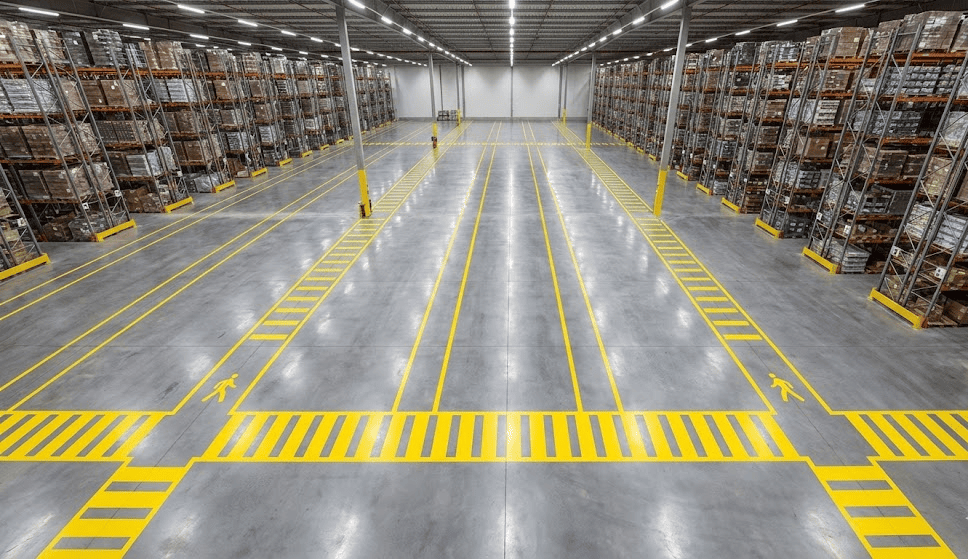
Warehouse floor striping is a professional line marking system applied directly to concrete or existing coated floors to define pedestrian walkways, forklift lanes, storage zones, hazard areas and safety boundaries. Done right, it is one of the most cost-effective ways to improve operational efficiency, reduce workplace accidents and demonstrate OSHA compliance during facility inspections.
We stripe warehouses across Indianapolis and Indiana, and into Michigan and Tennessee, using industrial-grade epoxy and polyurethane paints that hold up to forklift traffic, pallet jack wear and constant foot traffic far longer than standard floor paint. Every project starts with a layout plan so lines, arrows and zone markings are placed correctly the first time, from a simple aisle system to a complete color-coded facility layout.
What makes professional striping worth it?
Improves traffic flow
Clearly marked forklift lanes and pedestrian paths reduce congestion and prevent costly collisions.
OSHA compliance
Proper aisle widths and hazard markings help satisfy OSHA walking-working surface requirements.
Long-lasting markings
Industrial epoxy and polyurethane paints resist forklift wear, pallet jacks and heavy foot traffic for years.
Color-coded zones
Different colors define storage, hazard and equipment zones for instant visual communication.
Fast installation
Most striping projects are completed in one day with minimal disruption to your operations.
Custom layout planning
We design the full striping layout before installation so every line, arrow and marking is placed correctly.
Standard striping colors
Available in all standard OSHA and industrial color codes. Custom colors on request.
Tnemec White *00WH
Pale15BR
Desert Sands04BR
Twine68BR
Slate Gray31GR
Light Gray32GR
Gray (ANSI No. 61)33GR
Sinker46GR
Fountainbleu25BL
Gainesboro05BL
Blue Channel42BL
Balsam91GN
Monterrey Tile28RD
Safety Red17SF
Safety Yellow *02SF
Black35GR
* Most commonly specified. On-screen colors are approximate; we bring physical samples to your site.
Our installation process
Every striping project starts with a layout plan and ends with clean, straight, long-lasting markings your team can rely on.
Facility assessment and layout
We walk the facility, map traffic patterns and design the full striping layout before any paint is applied.
Surface cleaning and preparation
The floor is thoroughly cleaned and degreased so paint bonds properly and lines stay sharp long term.
Line layout and taping
Reference lines are snapped and borders are taped to ensure perfectly straight, clean-edged markings.
Paint application
Industrial epoxy or polyurethane line paint is applied by machine or roller for consistent coverage and clean edges.
Symbols and zone markings
Arrows, text, hazard markings and zone identifiers are added to complete the facility layout.
Final inspection and walkthrough
We walk the completed layout with you to confirm every line, zone and marking meets your operational plan.
Warehouse striping FAQs
Have a question we haven't answered? Call (317) 525-1154 and talk to the crew that does the work.
This company has done several jobs for me and I will never use another company. They are great to work with and the crew is awesome. When they are done you will wish you had done it sooner.
What type of paint do you use for warehouse striping?
We use industrial-grade epoxy and polyurethane line paints rather than standard floor paint. They bond much more aggressively to the concrete and resist forklift tires, pallet jack wheels and foot traffic significantly longer than paint from a hardware store.
How wide should warehouse aisle markings be?
OSHA 1910.22 requires aisles to be marked and wide enough for the traffic using them. A minimum of 3 feet wider than the largest equipment is a common standard. We factor in your specific equipment during layout planning.
Can you stripe over an existing epoxy floor?
Yes. As long as the existing floor is in good condition and properly cleaned, we can apply line markings directly over it. Delaminating or heavily worn floors may need to be addressed first.
How long before forklifts can drive on the new striping?
Epoxy line paint typically reaches drive-over hardness within 24 hours under normal temperature conditions. We give you a clear timeline based on the product used and the conditions during installation.
Do you handle the layout design or do we need to provide a plan?
We handle it. As part of every project we walk the facility, understand your operational flow and produce the layout before any paint touches the floor. If you already have a plan, we work from it and refine as needed.
Recent projects
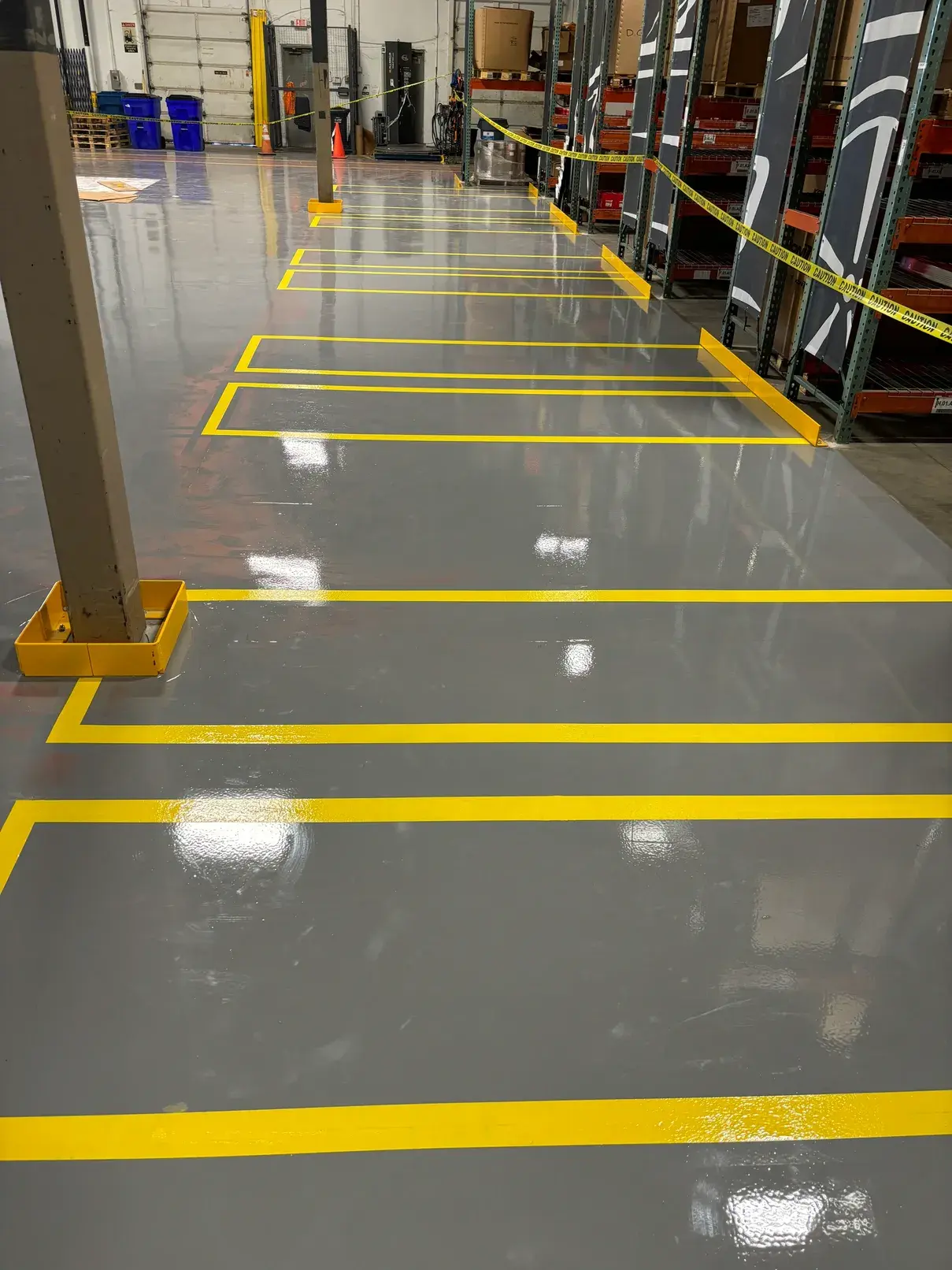
Real floors, photographed on the job.
Ready for a warehouse striping floor that lasts?
Tell us the square footage, how the space is used and your timeline. We usually reply within 24 hours, with no automated emails or texts.