Concrete joint and crack repair
Stable, properly repaired concrete is the foundation of every flooring system we install. We fix it right before anything goes on top.
System at a glance
- Fillers
- Rigid, semi-rigid or flexible, matched to crack movement
- Materials
- Epoxy, polyurea or polyurethane; epoxy mortar for spalls
- Finish
- Every repair ground flush with the slab
- Offered as
- A standalone service or before any coating
- Best for
- Warehouses, food plants, manufacturing floors
Fix the foundation before you coat it
Joint and crack repair is not a cosmetic step. Cracks and deteriorating control joints left unaddressed will telegraph through any coating applied over them, causing premature failure, delamination and ongoing maintenance costs. Proper repair means stabilizing the concrete, filling the void with the right material for the application and grinding everything flush before the floor system goes down.
We repair joints and cracks across Indianapolis and Indiana, and into Illinois and Ohio, as a standalone service and as part of every floor we install. Whether you have a warehouse slab with working cracks, a food facility with deteriorated control joints or a manufacturing floor with spalled concrete around equipment anchors, we assess the cause of the damage and apply the correct repair. Not every crack gets the same fix, and getting it wrong means the problem comes back faster than before.
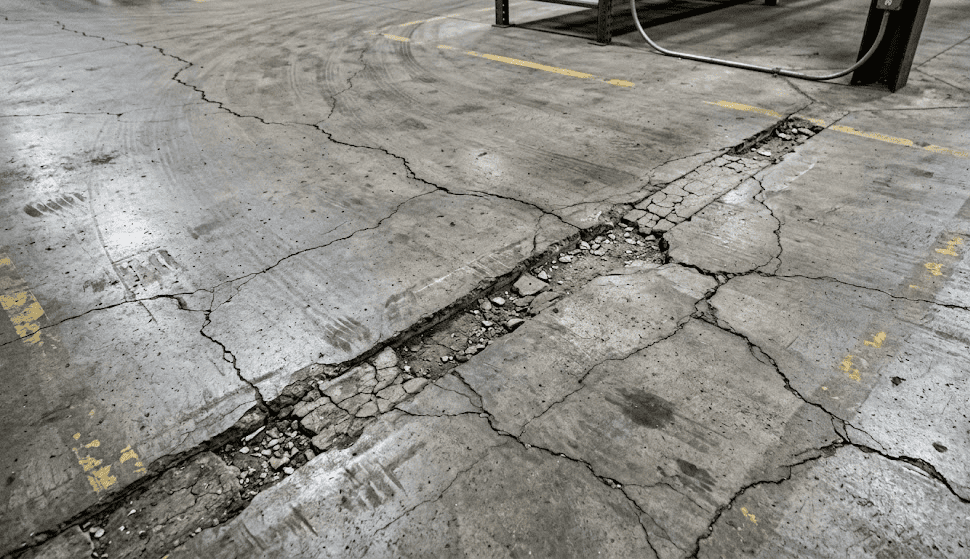
Why proper crack repair matters
Prevents coating failure
Unrepaired cracks telegraph through any coating and cause premature failure.
Right material for each crack
Different crack types need different repair systems: rigid, flexible or semi-rigid depending on movement.
Ground flush for a smooth finish
All repairs are ground flat and flush so the final floor system goes down on a level surface.
Addresses the root cause
We identify the crack type and cause before selecting the repair method.
Standalone or pre-installation
We handle crack repair on its own or as part of a complete floor installation.
Long-lasting repairs
Properly prepared and filled repairs hold up under heavy traffic and thermal cycling without reopening.
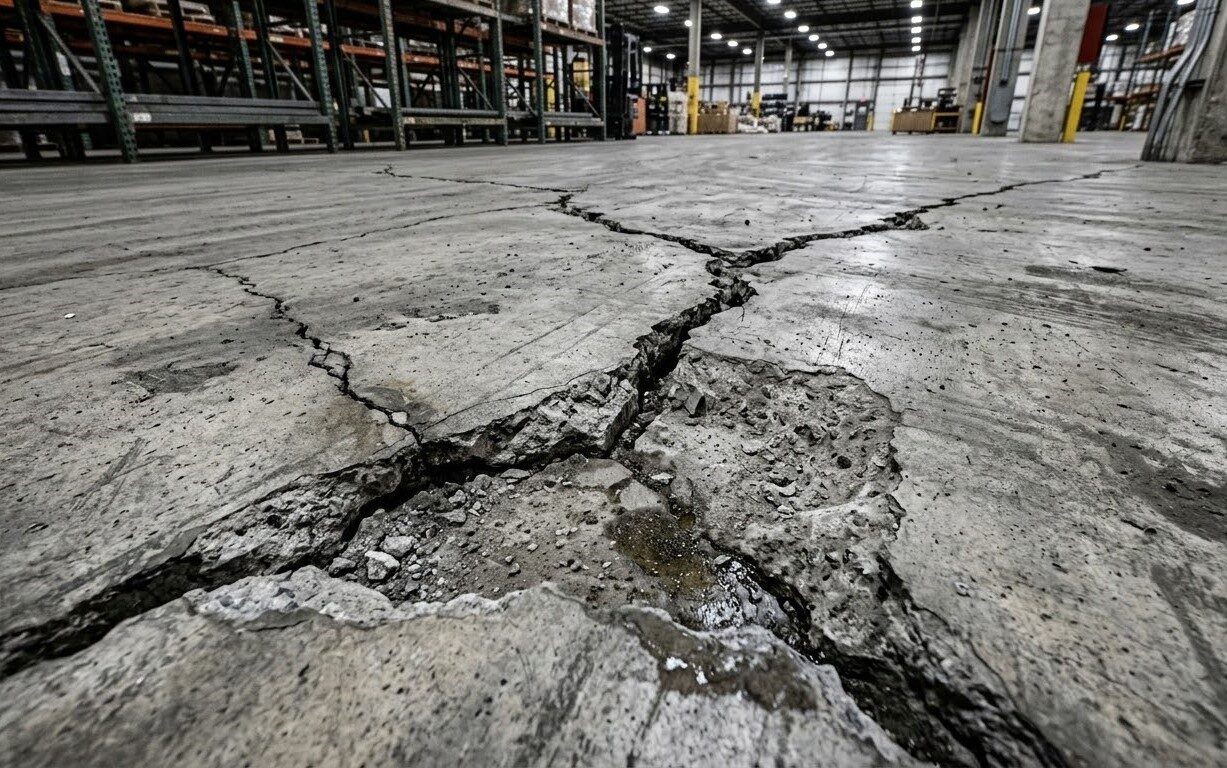
What happens when cracks go unfixed
Left alone, cracks let water reach the rebar beneath the slab, starting a cycle of corrosion, expansion and spalling that gets worse every season. Forklift traffic widens every open joint on every pass, open cracks fail sanitation inspections in regulated facilities, and any coating applied over unrepaired concrete will crack through and delaminate within months.
Properly repaired, ground-flush cracks stop water infiltration, stabilize the slab, eliminate contamination points and give any floor coating the stable base it needs for its full service life. A repair done right today costs a fraction of slab replacement after years of neglect.
Our installation process
Every repair we make is assessed, prepared and filled correctly so the problem does not come back.
Crack assessment and mapping
We inspect and map all cracks and joints to determine type, cause and the correct repair method for each.
Crack routing and preparation
Cracks are routed or chased out to create a clean, consistent profile for the repair material to bond into.
Joint cleaning and preparation
Deteriorated joint filler is removed and joints are cleaned and vacuumed before new material is applied.
Repair material application
The correct epoxy, polyurea or polyurethane compound is injected or poured into each prepared crack and joint.
Grinding flush
Once cured, all repairs are ground flat and flush with the surrounding concrete.
Final inspection
The repaired surface is inspected for voids, low spots and proper adhesion before any coating is applied.
Joint & crack repair FAQs
Have a question we haven't answered? Call (317) 525-1154 and talk to the crew that does the work.
We had a really old shop floor that was in bad shape. Most companies wouldn't even touch it. They got it done within the estimated timeline and it turned out great. They will be our go-to for any future coating needs.
Can you repair cracks before installing an epoxy floor?
Yes, and we always do. Crack and joint repair is a standard part of every floor installation we complete. Skipping it or doing it poorly is the most common reason epoxy floors fail prematurely.
What is the difference between a working crack and a dormant crack?
A dormant crack has stopped moving and can be filled with a rigid repair material. A working crack still moves from thermal cycling, load stress or settlement and needs a flexible or semi-rigid material that can accommodate that movement without cracking again.
Do you repair control joints or just fill them?
It depends on their condition and the floor system going over them. Deteriorated joints are cleaned out and refilled with the appropriate material. In some cases joints need to be honored through the coating system rather than bridged over, and we advise accordingly.
How long do crack repairs last?
A properly prepared and correctly specified repair holds up for many years under normal industrial traffic. The key factors are correct material selection, proper routing and cleaning before application, and adequate cure time before traffic or coating.
Can you repair spalled concrete as well as cracks?
Yes. Spalled areas, popouts and surface voids are repaired with epoxy mortar or cementitious patching compounds, depending on the depth and location of the damage. All repairs are ground flush before any floor system is installed.
Recent projects
Real floors, photographed on the job.
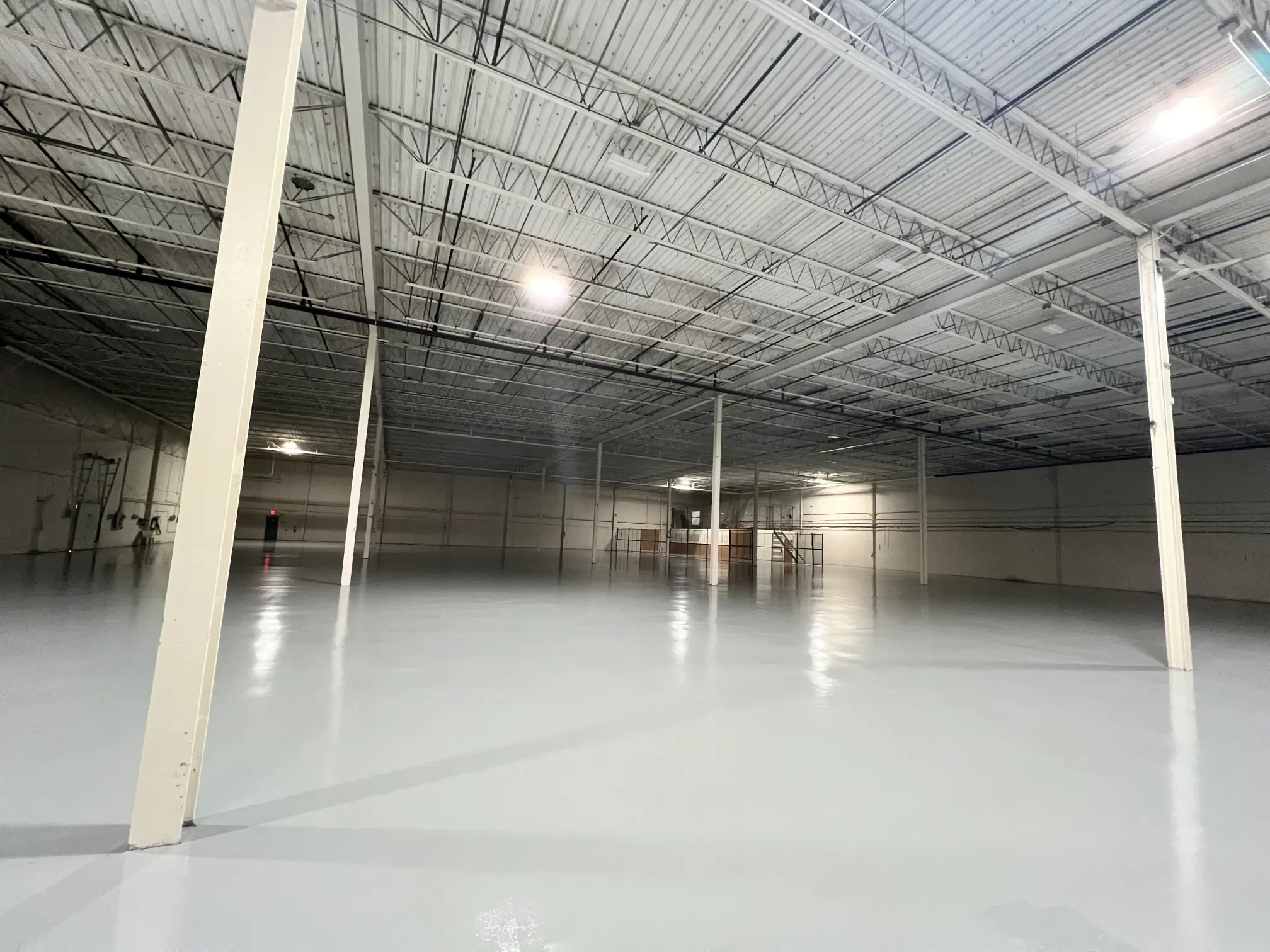
Ready for a joint & crack repair floor that lasts?
Tell us the square footage, how the space is used and your timeline. We usually reply within 24 hours, with no automated emails or texts.