Urethane concrete flooring
A seamless, heavy-duty floor system built for the harshest industrial environments. Thermal shock resistant, chemical proof and slip resistant by design.
System at a glance
- System
- Cementitious urethane
- Thickness
- 3/16 to 1/4 inch
- Installation
- One to two days for most projects
- Return to service
- Light service within 24 hours for many facilities
- Best for
- Food plants, kitchens, breweries, pharma, freezers and coolers
Industrial strength from the ground up
Urethane concrete, also known as cementitious urethane, is a thick, seamless flooring system that combines the toughness of concrete with the flexibility and chemical resistance of polyurethane. It is applied at 3/16 to 1/4 inch thickness and bonds directly to the existing slab, creating a surface that handles extreme temperatures, heavy impacts and constant chemical exposure without breaking down.
We install urethane concrete across Indianapolis and Indiana, and into Ohio and Michigan, for facilities that demand more than a standard epoxy can offer. Food processing plants, commercial kitchens, breweries, pharmaceutical facilities and heavy manufacturing floors all rely on urethane concrete because it holds up where other systems fail. If your floor takes daily abuse from thermal cycling, steam cleaning or harsh chemicals, this is the system built for it.
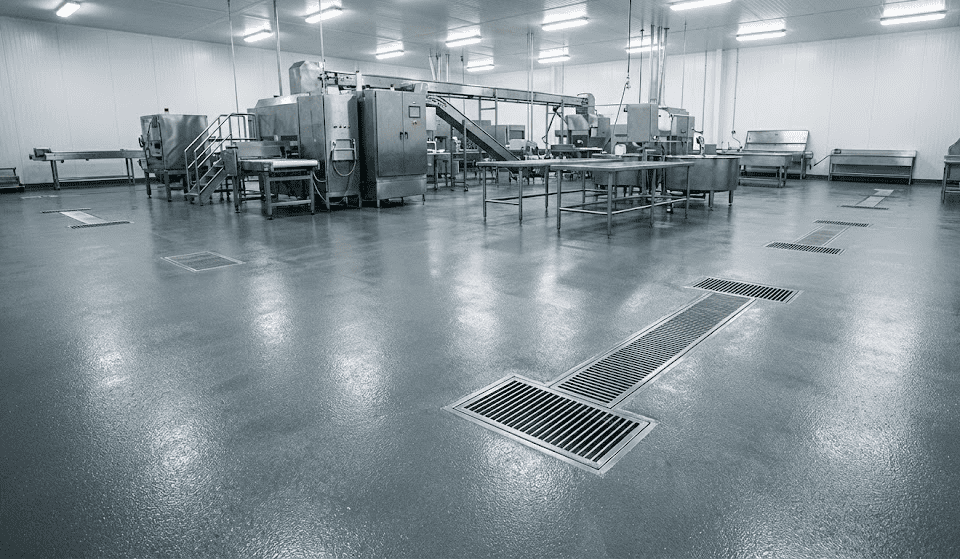
What makes urethane concrete the tougher choice?
Thermal shock resistant
Resists extreme temperatures without cracking or delaminating.
Chemical resistant
Stands up to acids, alkalis, oils and cleaning agents that would degrade standard epoxy systems.
Slip-resistant surface
Textured finish options provide reliable traction even in wet, greasy or high-traffic conditions.
Impact and abrasion resistant
The thick build absorbs heavy impacts and resists surface wear from forklifts and constant foot traffic.
Seamless and hygienic
No joints or grout lines means nowhere for bacteria, moisture or contaminants to hide.
Fast return to service
Engineered formulations cure quickly so your facility gets back to full operation with minimal downtime.
How urethane concrete stacks up
How urethane concrete compares with standard epoxy and polished concrete on the criteria that matter most in demanding industrial environments.
| Criteria | Urethane concrete | Standard epoxy | Polished concrete |
|---|---|---|---|
| Thermal shock resistance | 5/5 | 2/5 | 2/5 |
| Chemical resistance | 5/5 | 3/5 | 2/5 |
| Impact resistance | 5/5 | 3/5 | 4/5 |
| Slip resistance | 5/5 | 3/5 | 2/5 |
| Ease of cleaning | 4/5 | 4/5 | 5/5 |
| Install speed | 3/5 | 3/5 | 2/5 |
| Lifetime cost | 4/5 | 3/5 | 5/5 |
Ratings out of 5. Higher is better in every row; for lifetime cost, 5 means the lowest long-term cost.
Our installation process
Every urethane concrete installation follows a structured process engineered for heavy industrial environments.
Consultation and site assessment
We evaluate your facility, traffic loads, chemical exposure and temperature conditions to specify the right urethane system.
Surface preparation
Shot blasting and mechanical grinding open the concrete profile to ensure a strong bond with the urethane system.
Crack and joint repair
All cracks, joints and damaged areas are repaired and stabilized before the urethane system is applied.
Urethane base coat
The thick cementitious urethane base is trowel-applied to the prepared slab, building up the system's core strength.
Broadcast and texture setting
Aggregate is broadcast into the wet urethane layer to create the required slip-resistant texture profile.
Topcoat and seal
A chemical-resistant polyurethane topcoat seals the surface, locks in texture and adds the final layer of protection.
Urethane concrete FAQs
Have a question we haven't answered? Call (317) 525-1154 and talk to the crew that does the work.
Great service all the way from the quote process to how they handled themselves inside our facility. Great quality on the floor as well.
What makes urethane concrete different from standard epoxy?
Urethane concrete is a much thicker system that tolerates thermal cycling, steam cleaning and chemical exposure far better than standard epoxy. It is engineered for environments where temperatures fluctuate dramatically or where aggressive cleaning chemicals are used daily.
Is urethane concrete suitable for food and beverage facilities?
Yes. Urethane concrete is one of the most widely specified flooring systems in food processing, commercial kitchens and breweries. It meets USDA and FDA facility requirements and holds up to the steam, acids and constant washdowns those environments demand.
How thick is a urethane concrete floor?
Typically between 3/16 and 1/4 inch. This thickness gives it the impact resistance and thermal shock tolerance that thinner coating systems cannot match.
How long does installation take?
Most projects are completed in one to two days, depending on square footage. The fast-cure formulations we use allow many facilities to return to light service within 24 hours of installation.
Can urethane concrete be installed in freezer or cooler areas?
Yes. It is one of the few flooring systems that performs reliably in both freezer and ambient temperature zones without cracking or lifting at the transition points.
Recent projects
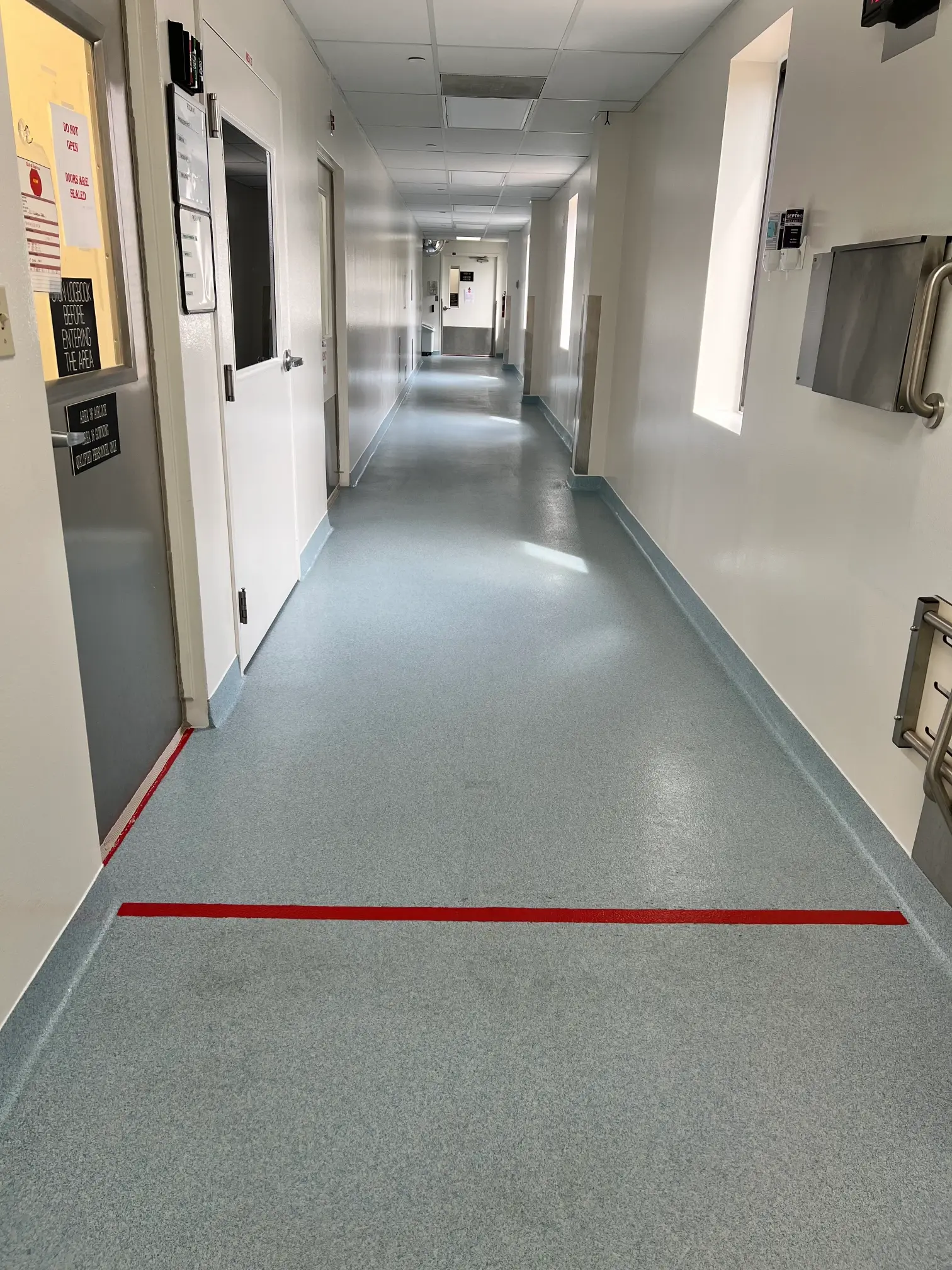
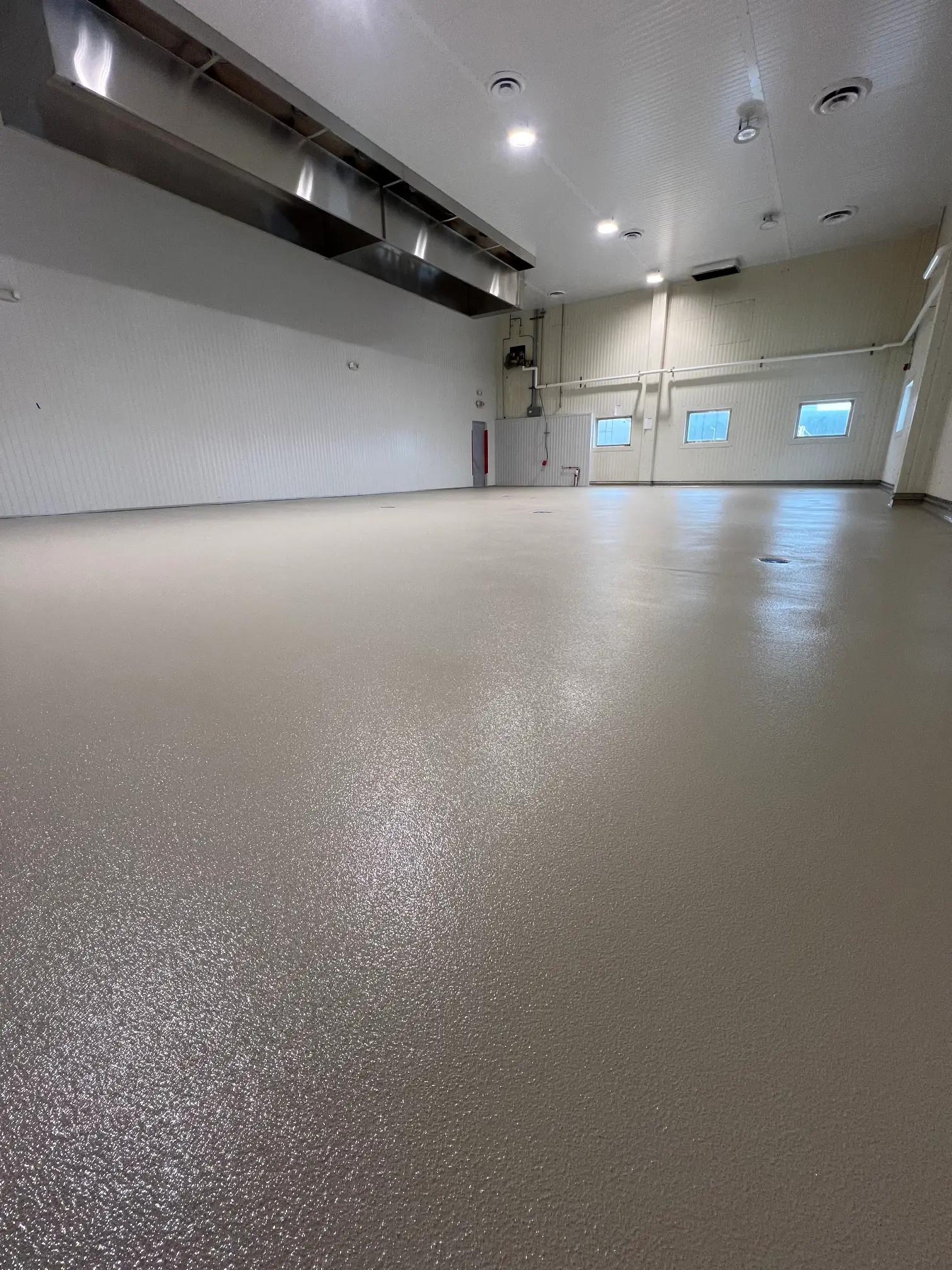
Real floors, photographed on the job.
Ready for a urethane concrete floor that lasts?
Tell us the square footage, how the space is used and your timeline. We usually reply within 24 hours, with no automated emails or texts.